Is my phone waterproof?
By Ultra Team
Published August 25, 2025
Let’s be honest—if you’re searching “Is my phone waterproof” on the internet, we’ll assume you already got it wet. Maybe you left it in your pocket on laundry day, or you dropped it in the pool. These things happen. Fortunately, most phones nowadays are water-resistant. But are phones waterproof? No, contrary to popular belief, no phone is truly waterproof. And those that claim to be can still sustain water damage under certain conditions. In this blog, we’ll discuss the differences between water-resistant and waterproof, and how you can keep your phone dry and operational.
Water-resistant vs. Waterproof
You may see these terms used interchangeably from time to time, but there is a distinct difference between water-resistant and waterproof. So what is waterproof and what does water resistance mean? Let’s dive in.
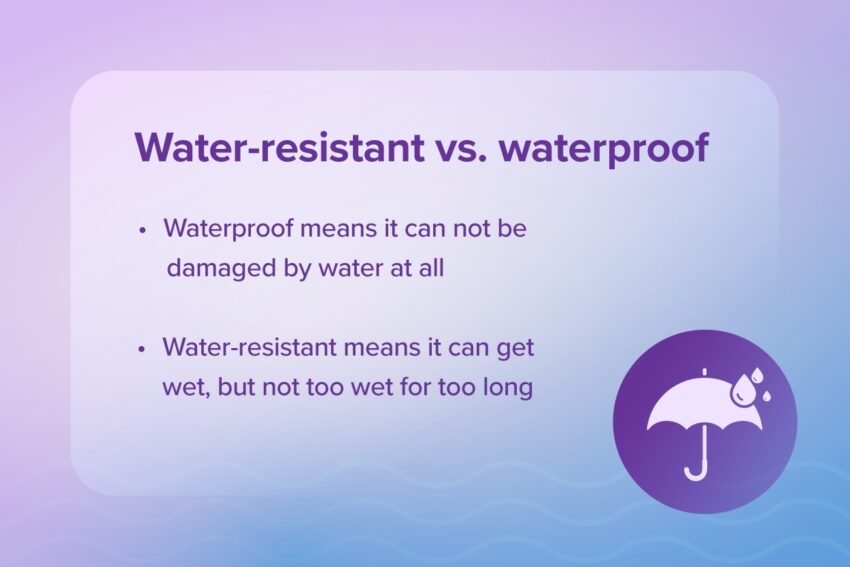
Waterproof means it can not be damaged by water at all
Waterproof is exactly what it claims to be, meaning water can not get in. This means that a waterproof item can be fully submerged underwater for hours and still work just fine. Few items, especially modern electronics, are truly waterproof.
Water-resistant means it can get wet, but not too wet for too long
If waterproof were a full-body rubber suit, water-resistant would be a fancy raincoat. Very effective, but water can still make its way in, especially if you stand outside in a downpour for a while. Water-resistant, when it comes to phones, means the occasional spill or accidental drop in the sink will probably be fine, but you can’t safely submerge it for an extended period of time.
Many new phones are marketed as water-resistant, but it’s important to note that water-resistant does not mean waterproof.
What is an IP rating?
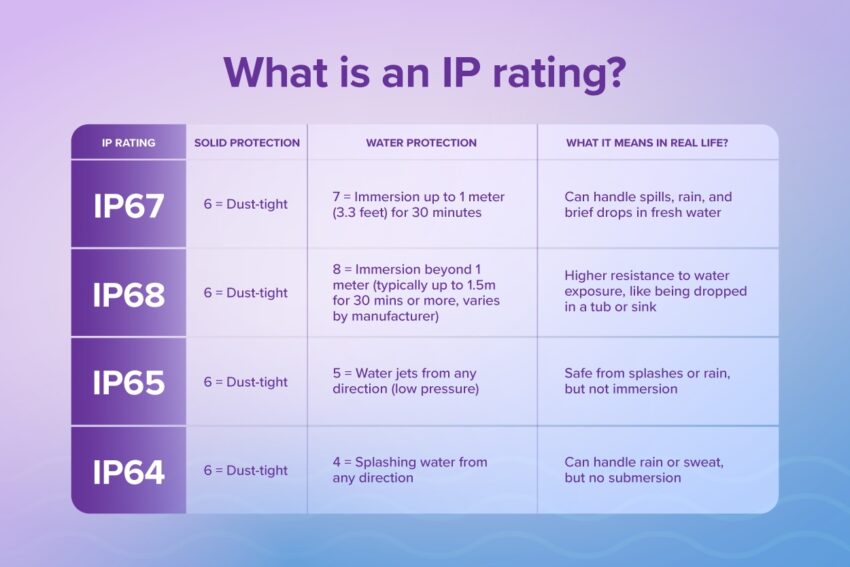
You may have come across the terms IP67 or IP68 a few times and wondered what exactly they mean. The IP stands for “ingress protection,” which means the level at which a device is resistant to dust and water. The number after IP is a numerical code that tells you the level of protection. The first digit is how resistant it is to solids AKA dust and dirt. A 6 rating means the phone is dust-tight. The second digit is how resistant it is to liquid, with 7 meaning the phone can be immersed up to a meter for up to 30 minutes, and 8 meaning it can be immersed beyond one meter for over 30 minutes (the exact specifications vary by manufacturer). An IP68 rating is essentially as close to waterproof as a phone can get, without being truly waterproof.
How to check your phone’s IP rating
There are a few places you can check for your phone’s current IP rating.
- The manufacturer’s website should have this information listed with other phone details
- If your wireless carrier is selling the phone on their website, it should also be listed in the device details there
- You can also find this info in the user manual that came with your phone, if you still have it

“Tip”
If you aren’t able to locate or confirm an IP rating for your phone, it’s best to assume it is not water-resistant.
Are any phones actually waterproof?
No phone is truly waterproof. Many are water-resistant these days, with the most water-resistant phones having an IP68 rating. Some manufacturers or online reviewers may say a phone is waterproof, but there are no mainstream phones that have been guaranteed to truly stand up to any and all water exposure. Unless you have a truly waterproof case on your phone, it will never be completely waterproof. But keep reading to get an idea of what phones are water-resistant.
Popular phones and their IP ratings
If you’re looking to upgrade to a phone that can withstand a splash every now and then, there are quite a few water-resistant phones on the market today.
iPhone 13 / 14 / 15 Series
Every iPhone since the iPhone 12 sports an IP68 rating, including Apple’s newest additions to the iPhone family.
Samsung Galaxy S24 Series
Widely lauded for its incredible camera quality, Samsung’s latest Galaxy device (and every Galaxy phone since the S7) also has an IP68 rating. If you’re in the market for a new device, you can explore the latest phones available directly through Ultra.
Google Pixel 8 and 8 Pro
The Pixel phone is a popular alternative to a Samsung Galaxy phone or iPhone that still boasts an IP68 rating. If you’re in the market for a new device, you can explore the Google Pixel 8 and Google Pixel 8 Pro available directly through Ultra.
Samsung Galaxy A54
This more budget-friendly member of the Samsung Galaxy family has an IP67 rating. If you’re in the market for a new device, you can explore the Samsung Galaxy A54 available directly through Ultra.
iPhone SE (2nd & 3rd Gen)
If you’re looking for a more budget-friendly iPhone, this one offers most of the same features you love, along with an IP67 rating.
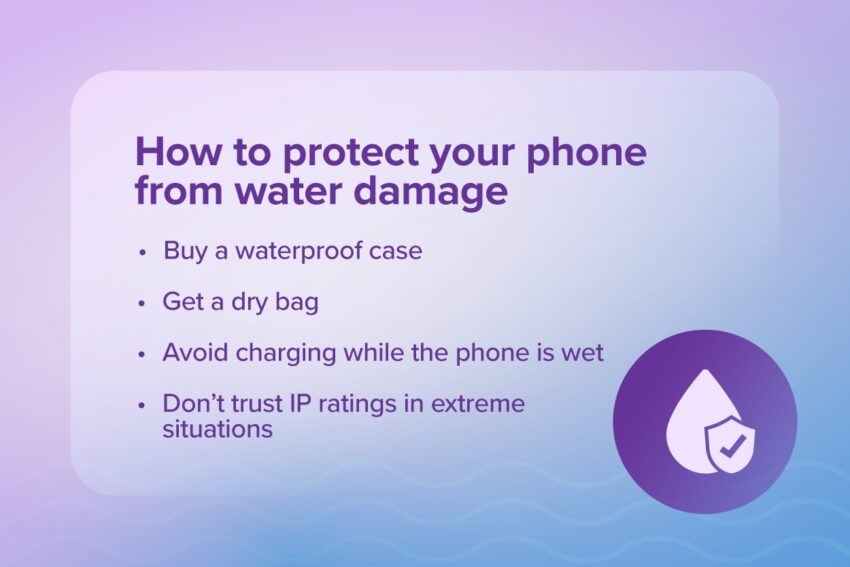
Even if your phone has an IP68 rating, that does not mean you can go swimming with it. Water pressure, chemicals like chlorine or salt water and other factors can still cause damage. An IP68 rated phone can also be susceptible to water damage if they’ve been dropped or damaged in the past. Here are a few things you can do to level up the water-resistance on your phone:
Buy a waterproof case
Many third-parties offer durable, waterproof cases that will provide another barrier between the water and your phone.
Get a dry bag
While a bit bulky for daily use, these bags are especially handy if your phone may be exposed to repeated splashes or submersions, like when swimming, camping or hiking. Just double check the quality for maximum security.
Avoid charging while the phone is wet
If you did drop your phone in water or it got splashed recently, wait until it’s completely dry before you start running electricity through it.
Don’t trust IP ratings in extreme situations
IP68 means water-resistance to a certain degree, but it doesn’t mean as much if you leave your phone outside in a hurricane. While the phone may be built to handle a heavy splashing, you should still do everything in your power to keep it as dry as possible at all times.
Protect your phone and your wallet with Ultra Mobile
Now you know that just because a phone may claim to be water-resistant, that doesn’t mean it’s invincible. Now you can look up your own phone model to check its IP rating. And if you can’t confirm it, be extra cautious with it around bodies of water—even the sink.
If you’ve read this far, it’s clear you care about keeping your phone in good shape, and that’s something worth protecting. Chances are, you also care about protecting your wallet. Ultra Mobile offers affordable, flexible wireless plans that help you save every month. But before you make the switch, the first step is making sure your phone is ready. Take a moment to check phone compatibility—it only takes a few seconds.