The true cost of “free” phone upgrades
By Ultra Team
Published April 20, 2026
We’ve all seen the ads that say “FREE iPhone” or “$0 upgrade” and thought “Wow, what a steal!” You just walk into a store and walk out with a brand-new phone, no upfront costs… and then you get your monthly bill. The reality is, “free” phone deals from major wireless carriers are rarely, actually free. And if you don’t understand how they work, you could end up paying more over time than you planned. We’ll break it down in easy-to-understand terms so you can make the right choice next time you’re due for a phone upgrade.
Are free phone upgrades really free?
The short answer? Not really.
Most “free phone” deals are structured around something called bill credits. How do bill credits work? It’s simple:
- You finance the full price of the phone
- Your phone carrier applies monthly credits to offset the loan payments
- Those credits are spread out over 24 to 36 months
So instead of paying $0, you’re technically paying for the phone and just getting reimbursed slowly over time. Which seems technically free, right? Except, there’s a catch:
- You’re usually required to stay on a qualifying (and more expensive) plan
- If you leave early, you have to pay the remaining balance for the phone
So the phone is only “free” if you follow all the rules for the duration of the contract, which can last a few years.
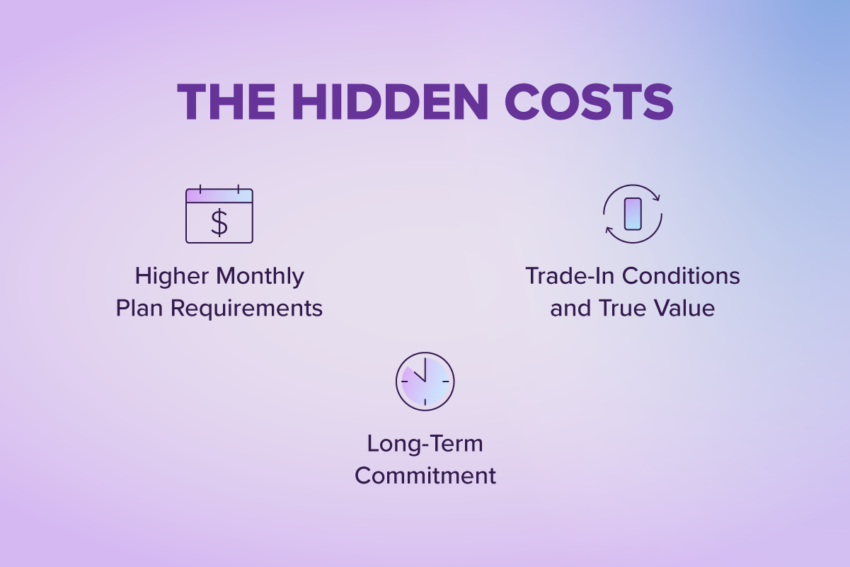
The hidden cost #1: higher monthly plan requirements
This is where carriers really make their money. Like we mentioned previously, to qualify for a “free phone,” you’re often required to switch to a premium plan and stay on that plan for the duration of the promotion. These plans often cost significantly more each month than options that might suit you better, based on your wireless needs and usage. And when you take into account the length of the contract, the extra cost of the plan over the years can end up exceeding the value of the phone. But they’re counting on you not taking the time to realize that because you’re too excited about your free phone.
The hidden cost #2: trade-in conditions and true value
Another common element of these promotions is the trade-in. Carriers will offer hundreds of dollars for you to trade in your current device. This may sound like a great deal at first, but you have to double-check the fine print, because there is often a catch or two (or several):
- The device you trade in must meet strict condition requirements
- The promo value is often higher than your phone’s actual resale value
- If your phone fails inspection, they could take back the credit they gave you for it
And once you’ve traded it in, you can no longer sell it yourself (for potentially more in cash) or keep it as a backup phone. You’re now stuck with the phone, plan and contract you agreed to.
The hidden cost #3: long-term commitment
The carrier offering you a free phone may also promise “no contracts,” but these deals still create a form of built-in commitment, by no longer issuing bill credits if you cancel your service or switch carriers. So if your bill goes up, your service gets worse, you move to a different service area, or you get a better offer from another carrier, you might still stick with what you’ve got to avoid having to pay off the remaining balance in full. This ends up tying your upgrade cycle to your carrier’s timeline, making it even more difficult to break free.
What a “free” upgrade can cost you over time
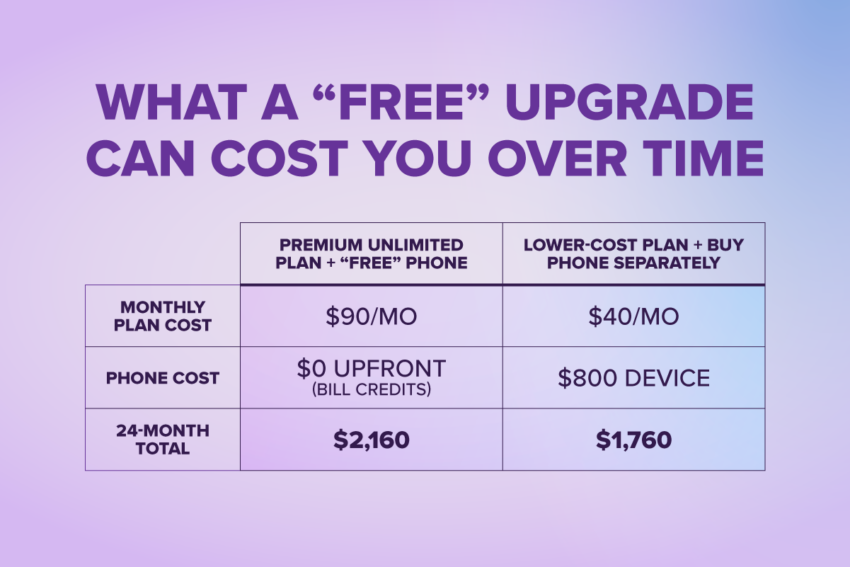
Free right now sounds good, but it’s important to consider the long-term costs. For example, a premium plan can cost about $90 per month. Let’s say the talk, text, and data you really need are available in a $40 per month plan. If you end up purchasing an $800 phone yourself and opting for the lower-priced plan, this can save you $400 over two years.
A different approach: separating your phone and plan
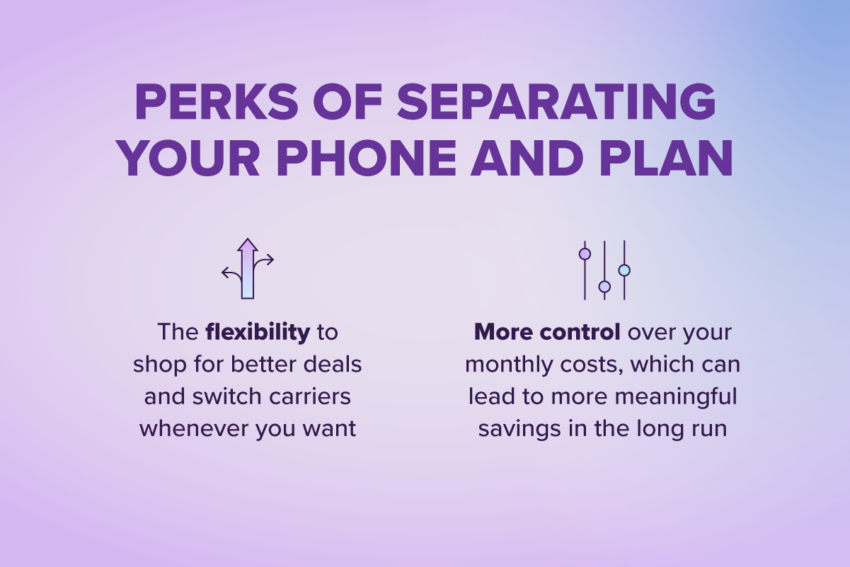
Yes, bundling everything together may seem convenient, but there’s another way. Purchasing your own phone separately and choosing a lower-priced wireless plan based on your needs comes with a few perks:
- The flexibility to shop for better deals and switch carriers whenever you want
- More control over your monthly costs, which can lead to more meaningful savings in the long run
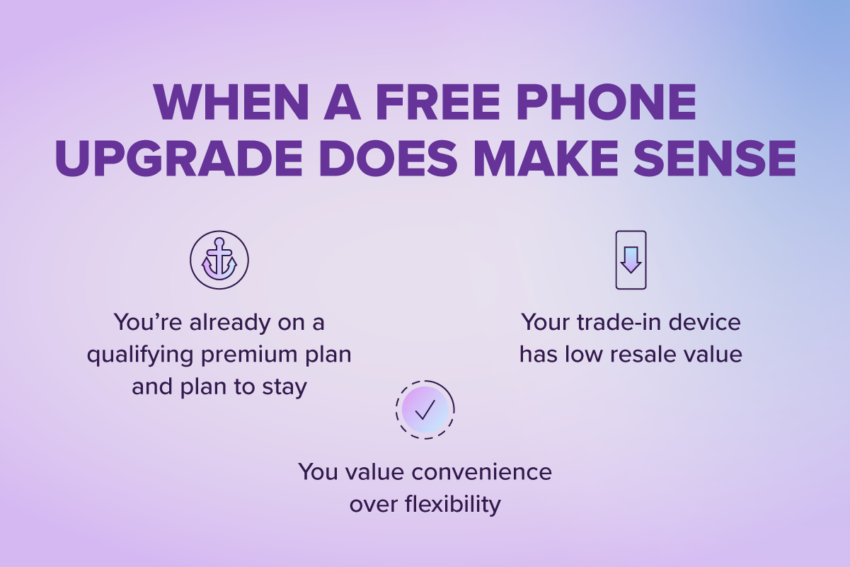
When a free phone upgrade does make sense
In fairness, free phone deals aren’t always bad. There are some scenarios where taking advantage of a free phone promo might make sense:
- You’re already on a qualifying premium plan and plan to stay with your carrier
- Your trade-in device has low resale value
- You value convenience over flexibility
The key factors here are trust and credibility. Are you happy with your carrier? Are you able to accurately predict the monthly costs that will come with a new “free” phone? If so, a free phone promo may work for you.
It’s not about the phone; it’s about the total cost
It’s important to remember that, while “free” phone upgrades can be exciting, the real cost is often hidden in your monthly bill. The smartest shoppers know to look at the total cost over time, not just the device price. So before your next phone upgrade, ask yourself what you really need out of your phone and your wireless plan. The best upgrade isn’t the one that looks free today, it’s the one that fits your budget long term. Ultra Mobile understands this, which is why we offer reliable, affordable phone plans that you can pair with any unlocked phone. We also don’t do long-term contracts, because we have a feeling you’re going to want to stick around anyway.